What “hybrid buffalo” means
A hybrid brings together parent plants through breeding. In Stampede’s case, Lawn Solutions Australia describes a controlled cross between Buffalo plants with different chromosome counts, using embryo rescue to help develop the new plant. It is still a living, growing lawn that is laid as natural turf.
“Next-generation” describes the newer breeding and selection behind this variety. It is useful background when comparing products, but it does not replace checking whether a particular lawn will get enough light or how it will be used.
The breeding and Australian trial background
LSA’s development account describes work with Dr Ambika Chandra at Texas A&M University. Eighteen Buffalo cultivars arrived in Australia in May 2022, spent a year in post-entry quarantine, then entered local evaluation. The programme compared characteristics including density, colour and disease susceptibility across different conditions.
LSA says Stampede was selected following six years of trials across Australia and the US. That local testing background helps explain the interest in this modern Buffalo.
What the reported benefits mean for a homeowner
LSA reports improved winter colour retention, strong establishment and wear recovery, along with improved drought and disease resilience. Here is how we would use those claims when discussing a lawn.
- ColourColour retention means holding a green appearance longer into cooler months. Consider how that fits the look you want, along with the light your lawn receives.
- RecoveryRecovery means grass filling worn or thin areas as it grows. Tell us about play areas and repeated walking or pet routes so we can discuss the wear your lawn will face.
- ResilienceThe reported drought and disease resilience describes how the grass copes with those pressures. Soil conditions, watering and regular care still influence the lawn at home.
Sunlight, watering and ongoing care
The Stampede technical sheet gives a minimum of two hours of sunlight per day and recommends free-draining soil. We use that guidance as a starting point and look at the actual yard. Check the shaded areas beside fences and beneath trees, as well as the brightest part of the lawn.
The sheet lists a mowing range of 20–50 mm. The appropriate height and timing for your lawn should follow the supplied care advice and its growing conditions. Allow time for mowing and edging when deciding whether the finish suits your household.
- Before the turf arrivesMake sure there is access to water and a way to reach every part of the new lawn. Tell us about narrow access, existing paths and areas where water tends to collect.
- During establishmentFollow the watering guidance given for the installation and check moisture at edges and joins. Keep people and pets off the turf while the roots establish.
- As the lawn settles inCheck rooting before the first mow and adjust care to the weather and growth. If one area looks different, check what is happening there instead of applying the same response to the whole yard.
Plan the first few weeks
Watering and aftercare for newly laid turf
Use our practical guide to understand moisture checks, early use and the first mow.
Stampede in practice: our Oatlands side lawn
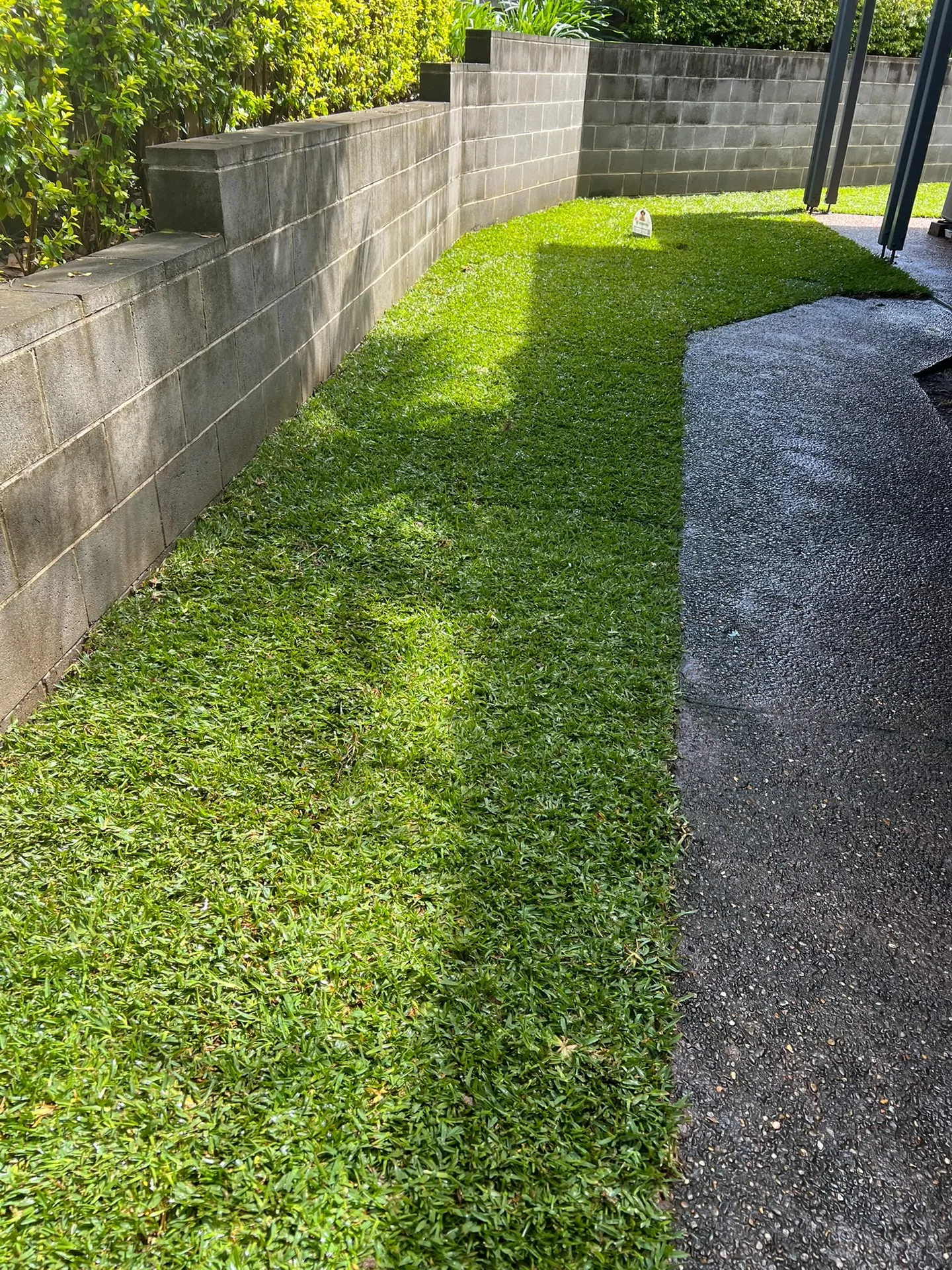
Our October 2026 Oatlands project used approximately 35 m² of Stampede Hybrid Buffalo. The narrow lawn follows an existing curved path, with a block wall and posts along the space. The photo sequence shows exposed soil, rolling and the fresh turf fitted to those boundaries.
The visible result is a continuous lawn along the side of the home. These photos record the installation finish. The colour, recovery and resilience benefits discussed above are LSA’s reported variety characteristics, rather than long-term results observed on this new lawn.
Request a Stampede installation assessment
Send your suburb, approximate lawn area and a few photos showing the yard and access. Include what you know about sunlight through the day, how the lawn will be used and any work needed to remove the old surface.
We can then assess the preparation and installation, discuss whether Stampede suits the property and confirm availability with your installation quote.
Explore the installation
Stampede Buffalo turf installation in Sydney
See the variety overview, the Oatlands work and what we consider for your installation quote.