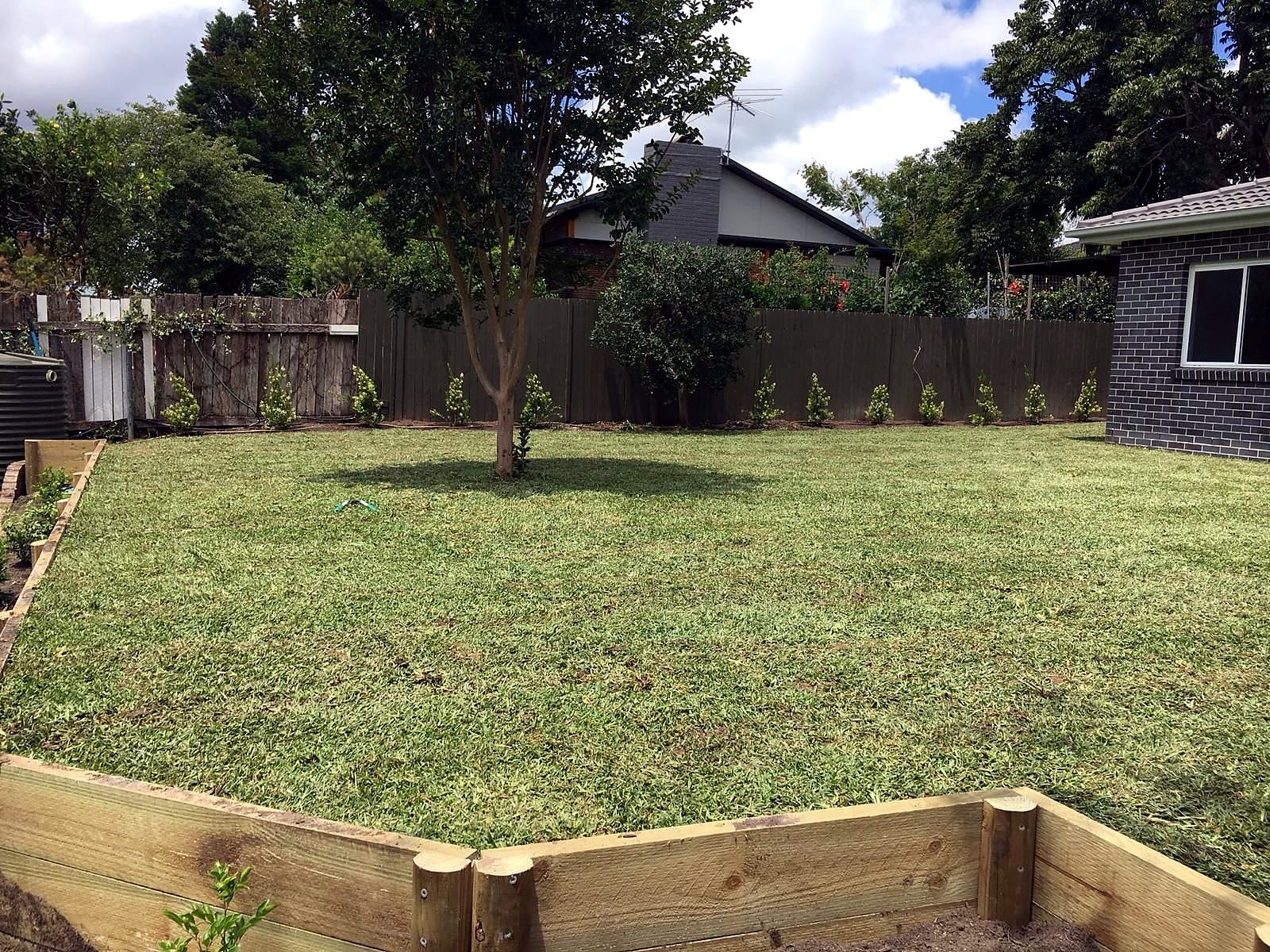
Clear the existing surface first
Fresh turf should sit against prepared soil, rather than over an old lawn, weeds or building debris. The agreed area needs old turf and unwanted growth removed, with loose rubble, rocks and leftover materials cleared before the soil is prepared.
Removal can form part of our installation work. Agree the scope before clearing anything yourself, including what will be removed and taken away. Tell us about previous weed treatment, excavation or imported fill so the timing and preparation can account for it.
Preparation and laying together
Have the ground preparation included in your turf installation
We assess the starting ground and agree the clearing, soil work, fresh turf and laying your lawn needs.
Prepare the soil and agree the finished levels
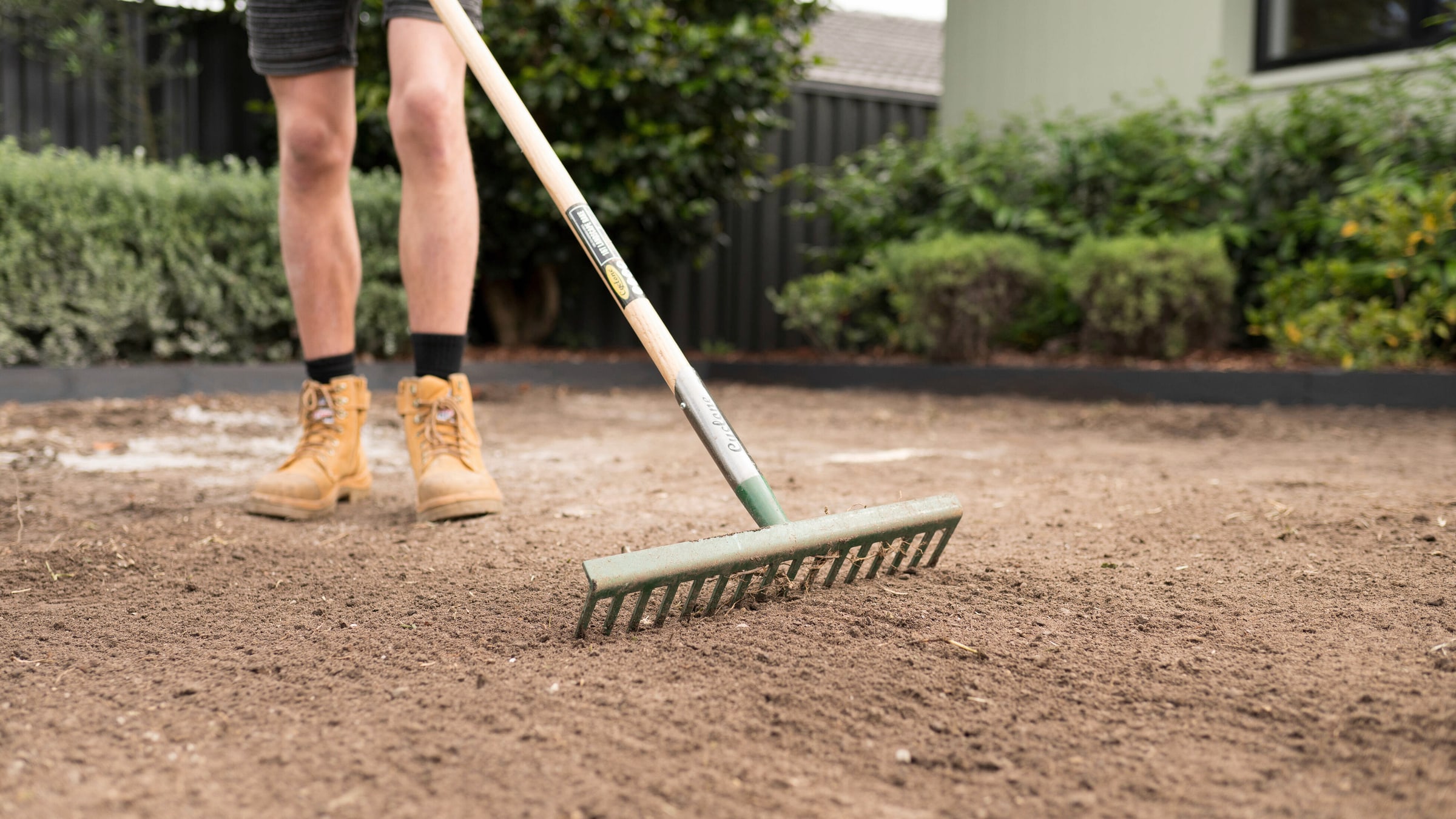
The base needs to be smooth and firm so the turf sits evenly. Compacted ground may need loosening, while some yards need suitable fresh soil for more depth or a better base. These are property-specific decisions, rather than steps to apply to every lawn.
Our preparation can include rotary hoeing where it is suitable and safe, adding soil where needed, then raking, shaping and lightly rolling the area. Known pipes, cables, irrigation and tree roots need to be identified before ground work is agreed.
Consider the finished lawn height beside paving, doors, drains and garden edges before the soil is shaped. Low spots, water movement and larger level changes need attention before laying; unresolved drainage, retaining work or unstable edges may need to be completed by the appropriate trade first.
Make room for materials and finish other trades
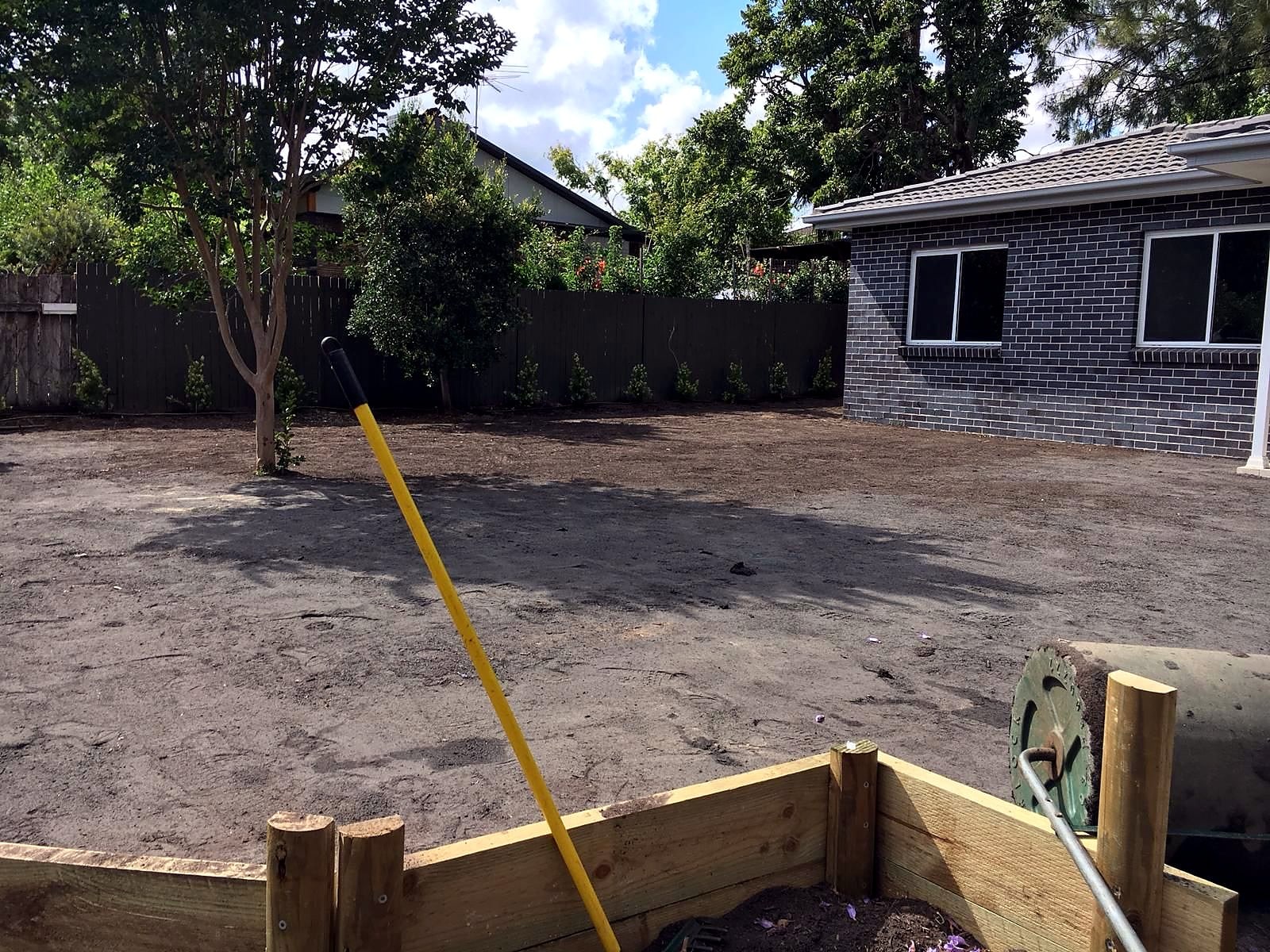
Walk the route from the street to the lawn. Gates, stairs, tight corners and long side passages affect how soil, waste and fresh turf can be moved. Tell us about restrictions early, then keep the agreed route clear on installation day.
Finish building, paving and other work that needs to cross the lawn before the new turf goes down. Move loose items and arrange another route for people and pets while the lawn takes root. If another trade is still working, coordinate the dates before turf delivery is arranged.
Have watering ready before laying day
Test that your hose or sprinkler reaches the whole lawn, including edges, corners and areas sheltered by buildings. Arrange for someone to look after the turf after installation and check the current water-use rules for your area.
We water the turf in and explain the early care. Ongoing watering then needs to suit the weather, soil and lawn as the roots settle in. A fixed schedule is not right for every yard.
After the turf is laid
Watering, foot traffic and the first mow
Know what to check while your new lawn starts to establish.
Photos and details for your quote
You do not need to prepare the ground before enquiring. Tell us your suburb and what is there now; a rough size and a few photos help us understand the work. We can confirm the measurements and preparation before turf is ordered.
- The lawn and its sizeTake wide views from two or more corners. An approximate length and width for each area is useful if you have it.
- The route into the yardShow gates, stairs, narrow passages, tight turns and the route from the street.
- The ground and surrounding edgesInclude existing grass, bare patches, rubble, low spots, paths, drains and garden beds. Mention known services and any unfinished trades.
Plan your new lawn
Tell us what you would like to change
Send your lawn details and add photos if helpful. We can work through the preparation with you.